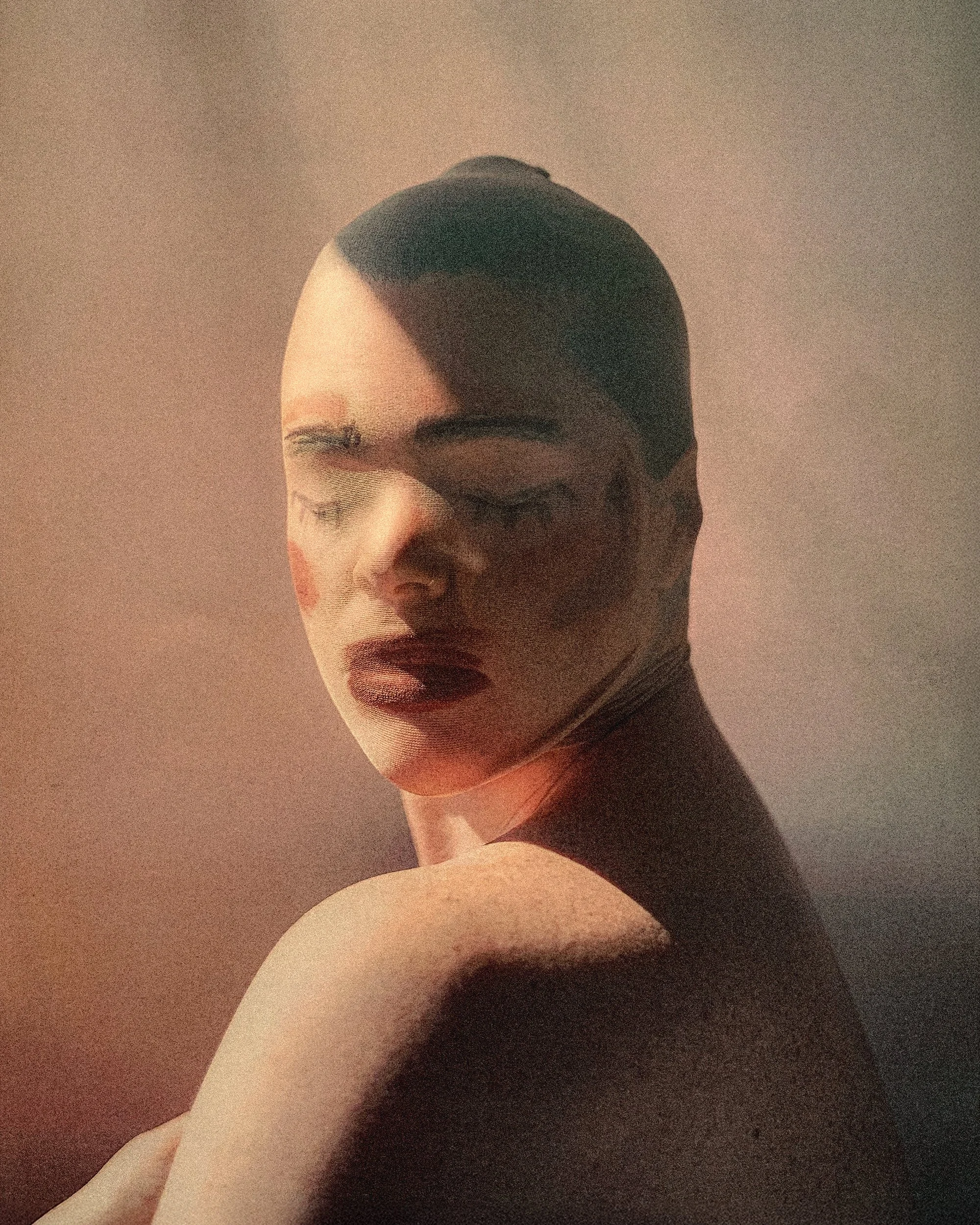
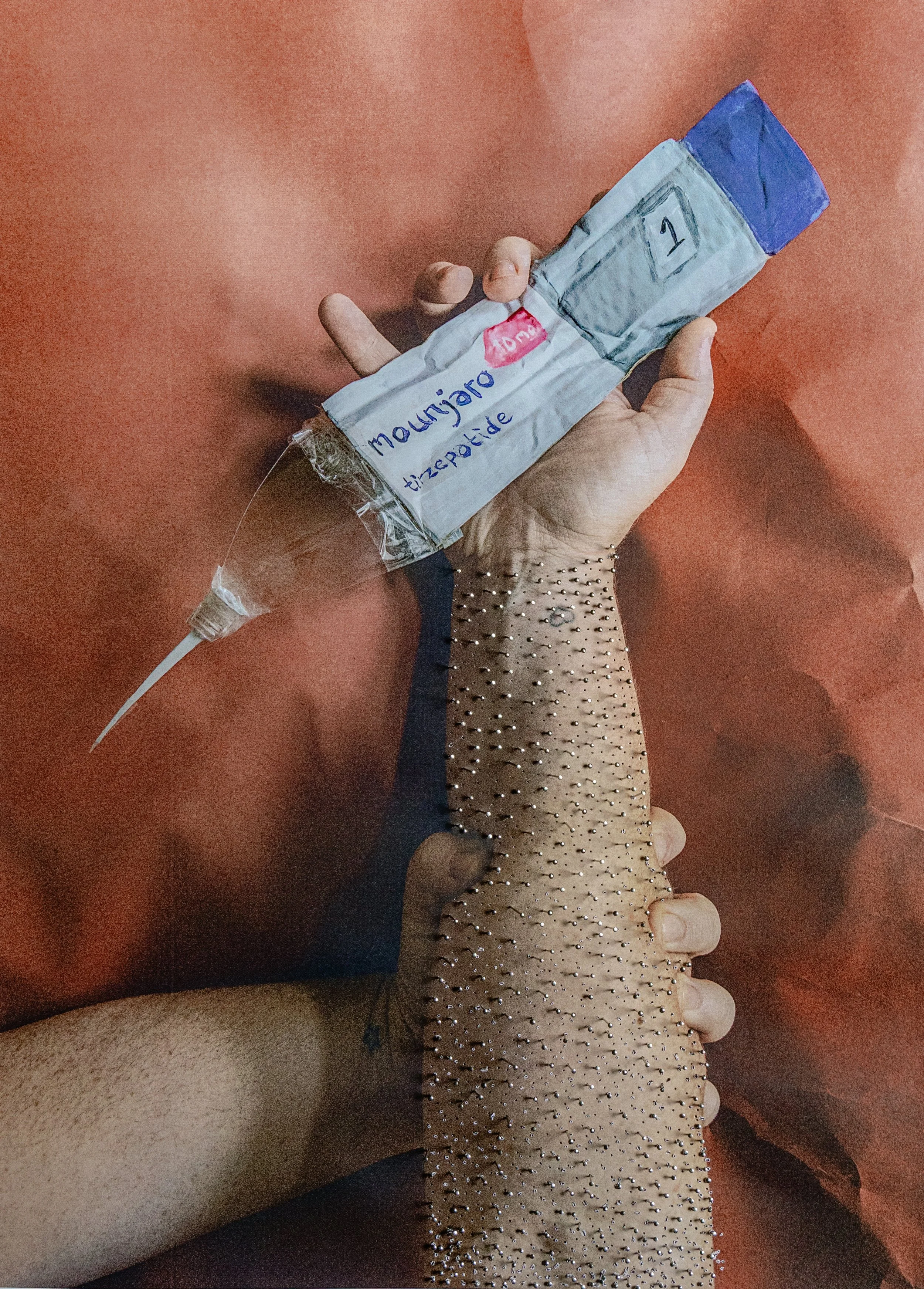
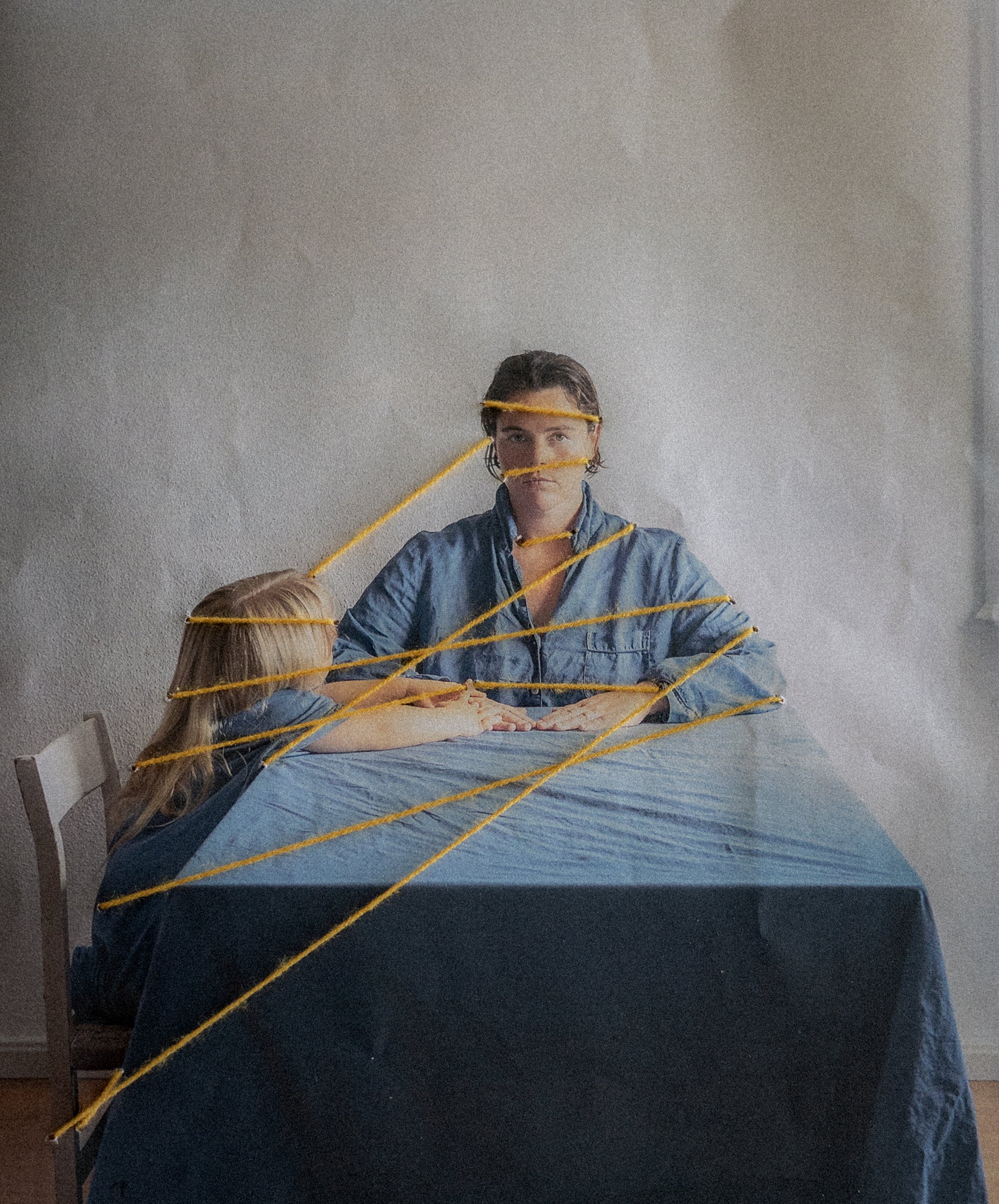
Chariot is an ongoing photographic project exploring how diet culture and body ideals from the late twentieth and early twenty-first centuries continue to shape the way bodies are experienced, understood and judged.
I grew up during a period when calorie counting, tabloid body-shaming and public weigh-ins were normalised. At eight years old, I was placed on my first diet by a school nurse. By adolescence, my body had already become something to be monitored and measured, compared against public ideals. Now, as a mother to a five-year-old daughter growing up within a digital image economy, I find myself questioning what might be inherited, and what I might pass on.
The work is rooted in my own experience of discomfort and disconnection from my body. I have never felt fully at home in it, or entirely comfortable inhabiting it. It is something I have to consciously remember belongs to me. I do not always recognise myself in mirrors. Dysmorphia intensifies this sense of separation, making the body both familiar and difficult to recognise or inhabit with certainty. That detachment feels particularly charged within a culture that places such enormous value on the body — on its size, appearance and perceived desirability. There is a tension between feeling estranged from the body internally while being repeatedly told, externally, that it is one of the most important things about us.
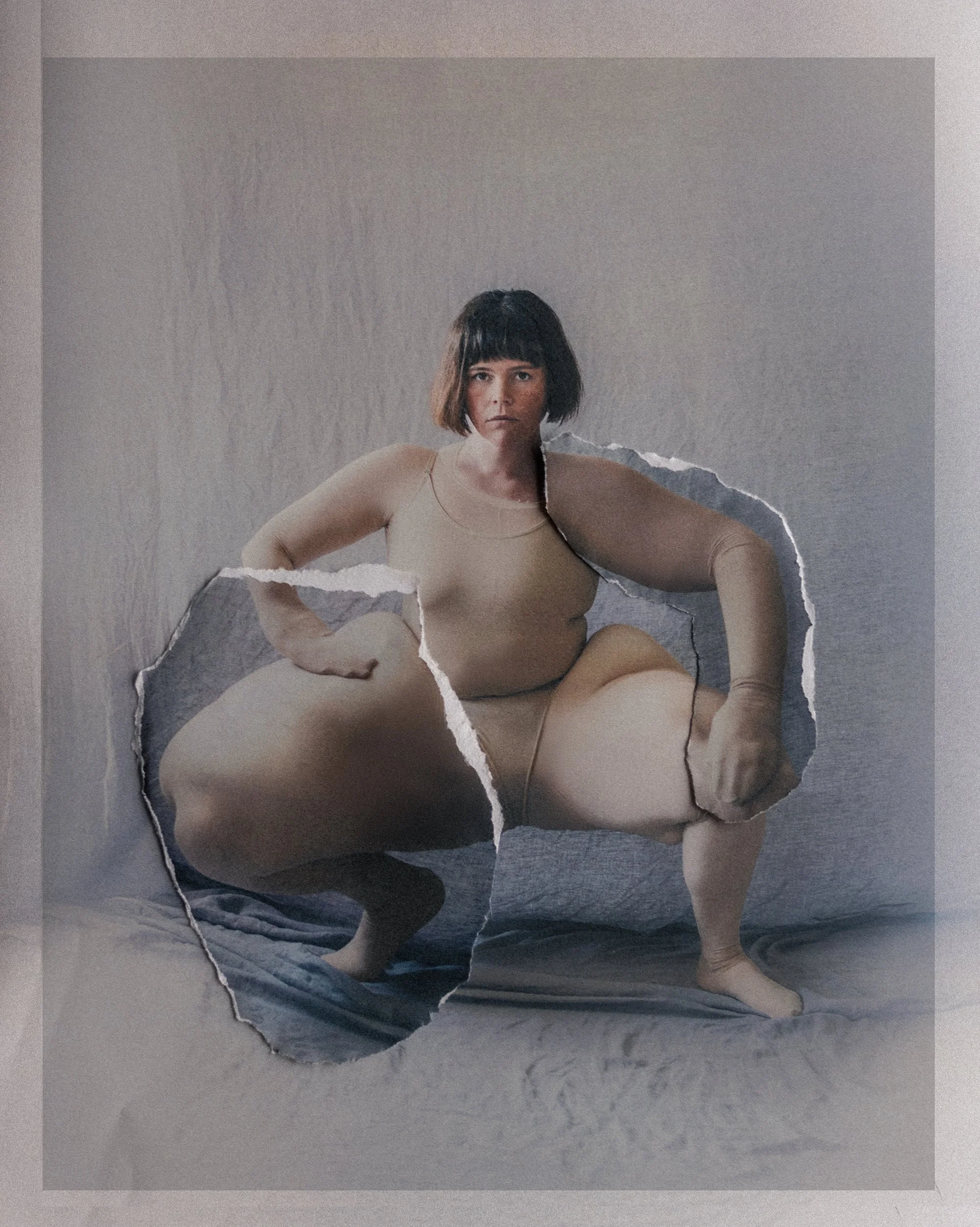
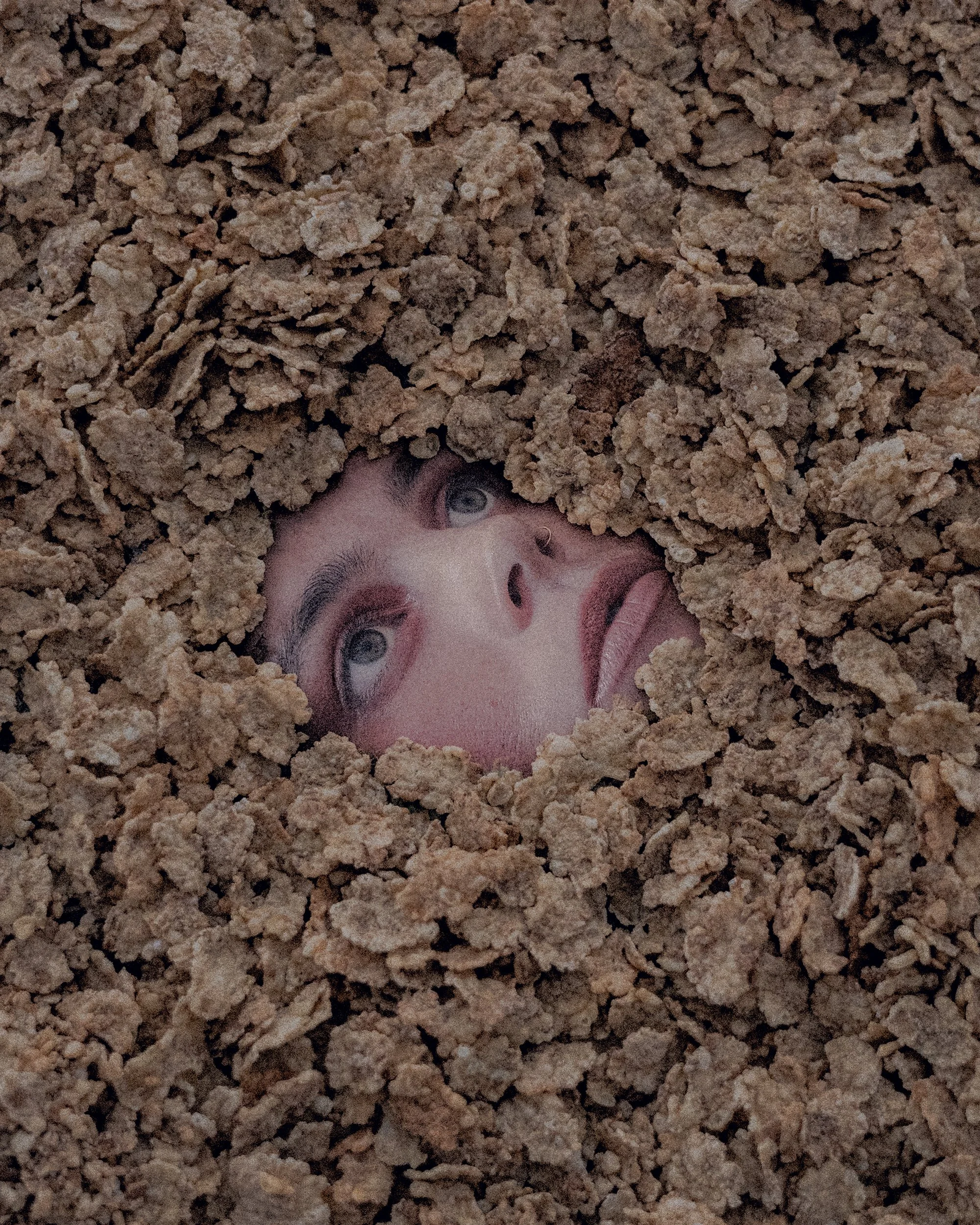
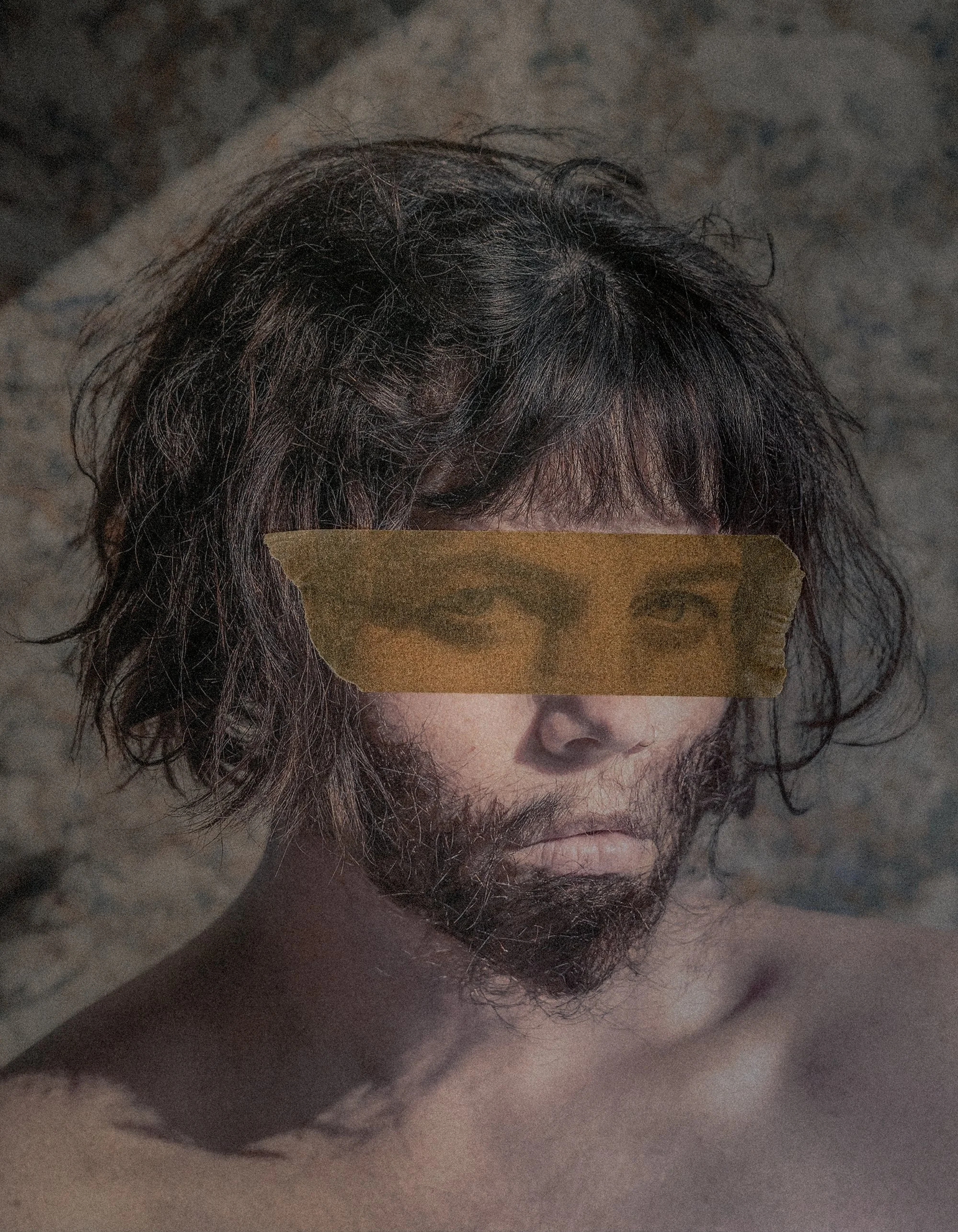
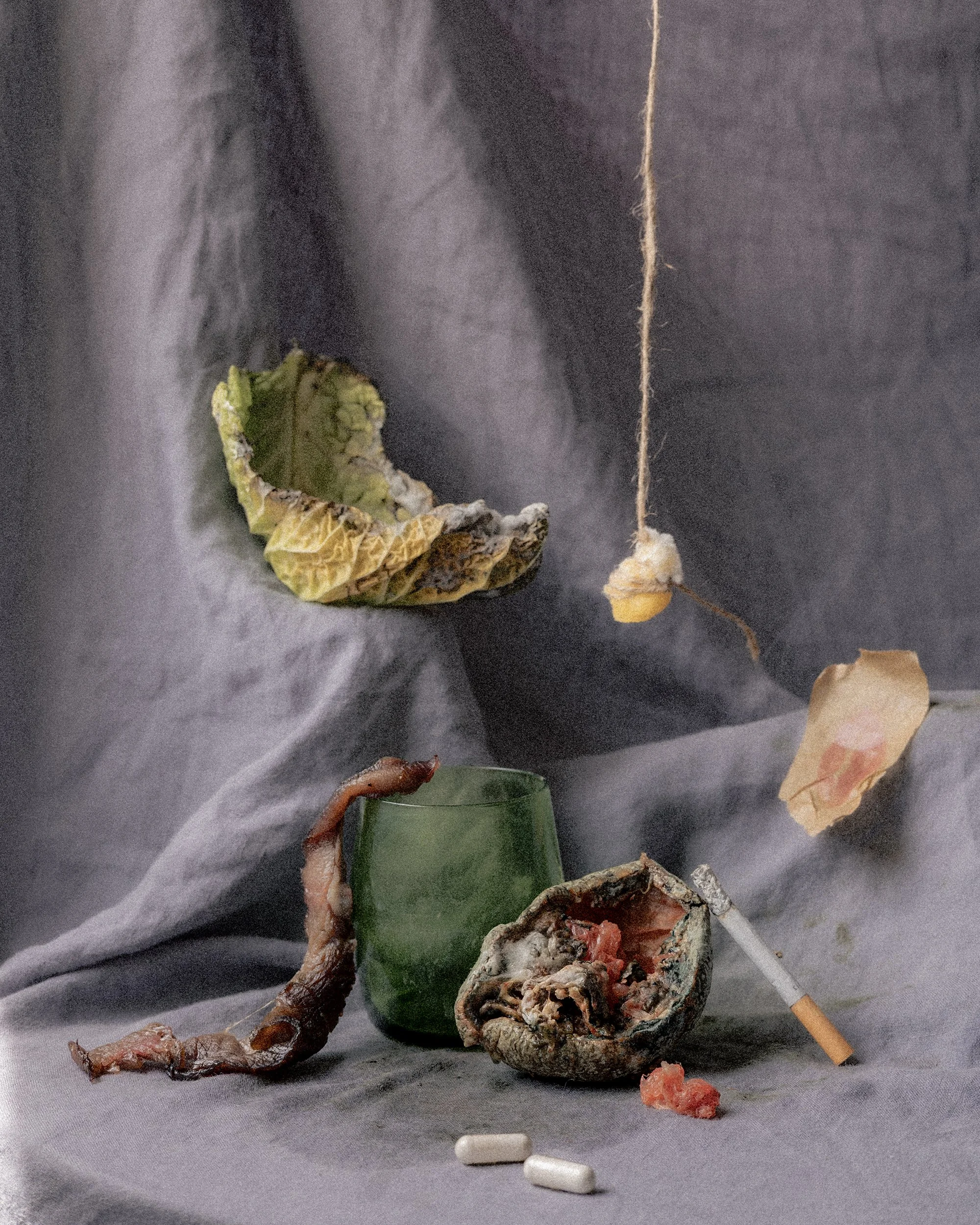
Through staged self-portraiture and constructed still life, I revisit experiences that have often felt painful, negative and fixed. By transforming them into a dreamlike, painterly visual language, I am able to approach them at a distance. This process does not erase the discomfort, but allows me to acknowledge and reflect on the detachment I feel from my body, and to reconsider experiences that once seemed immutable.
Images are repeatedly printed, physically altered and re-photographed, introducing shifts in surface, scale and materiality. This process mirrors the instability of bodily perception: skin becoming paper-like, the body becoming image, and the image becoming something that can be handled, damaged and remade. It also reflects the circulation and distortion of images within contemporary visual culture, where ideas of beauty, worth and identity are continually absorbed and internalised. The photograph becomes less a record of the body than a space in which the body can be reconstructed, questioned and experienced differently.
As the project develops, collaborative image-making will introduce multiple voices and lived experiences, exploring how ideas around beauty, weight, control and self-perception are carried across generations, and how these inherited narratives might be recognised, challenged, disrupted or reimagined.